add_filter( 'auto_update_plugin', '__return_true' );

Black Rose | First Country

They say the Black Rose doesn’t grow in gardens. It blooms where something has ended — at the edge of a field after the fire, beside a fence that’s seen too many goodbyes. No one plants it. No one tends it. It rises on its own from hard ground, dark as midnight and stubborn as memory. Some call it a curse. Others say it’s proof that even in the aftermath, something rare can still take root. If you ever find one, you don’t pick it. You let it stand — a reminder that not all beauty asks to be saved.

[Verse 1]
I found you growing in the rain
On a street without a name
You were dark as midnight skies
But your silence said goodbye

Your thorns didn’t cut me like they should
Maybe I misunderstood
You were never reaching out
You just sowed seeds of doubt

[Chorus]
Black rose, breaking through the light
How you grow in places where flowers die
You were born of shadow, still you try
To make a garden out of goodbye

[Verse 2]
I played your name on my old guitar
A song that never got too far
This ballad in disguise
Underneath your lullaby

And still I don’t know what you meant
But I keep that faint lament
Like perfume on a winter coat
Or a letter that I never wrote

[Chorus]
Black rose, breaking through the light
How you grow in places
Where flowers die
You were born of shadow, still you try
To make a garden out of goodbye

[Bridge]
Faded streets on cloudy days
Your smile cuts through the smoky haze
Was it love or just a pose
I’ll never know
My black rose

[Final Chorus]
Black rose, I see you in my sleep
Dancing where the wounds run deep
Even dusk can hold a spark
And bloom a rose inside the dark

Written by Rob Charron & Eddy Bugnut
Mixed by Eddy Bugnut

songsterr.com/a/wsa/first-country-black-rose-first-country-tab-s4121085/r5396365

Gravity and Jack Daniel’s

we, fearing Fortune’s fickle smile, did climb the mountain’s breast to drink our courage down.
There, where dawn’s pale breath unstitched the stars, I sought the slope alone,
hoping the maidens might descend and grant discourse
on matters grave — such as why their shoes and hair conspired in such strange discord.

But lo! mid-thought, I lost acquaintance with the earth.
The bond ‘twixt man and gravity was broke,
and down I fell — a hundred cubits deep into the pit of my own design.
Yet providence, mocking yet merciful, set me upon a lonely tree,
whose arms, though frail, received me as a sinner spared.

There hung I, bruised of knee and conscience both,
and mused upon my life — that poor concerto played in service of the Muse.
Call it not noble, this pursuit of sound!
I had sought art for art’s own sake, and found but vanity adorned.
For music and art, though oft they dance, do seldom wed;
and where I left my soul, I scarce remember.

Oft upon the stage I hear them prattle:
“He’s comely.”
“Would he but smile.”
“What monstrous hair is that?”
And I, poor fool, within myself reply,
“One day shall a princess understand.”
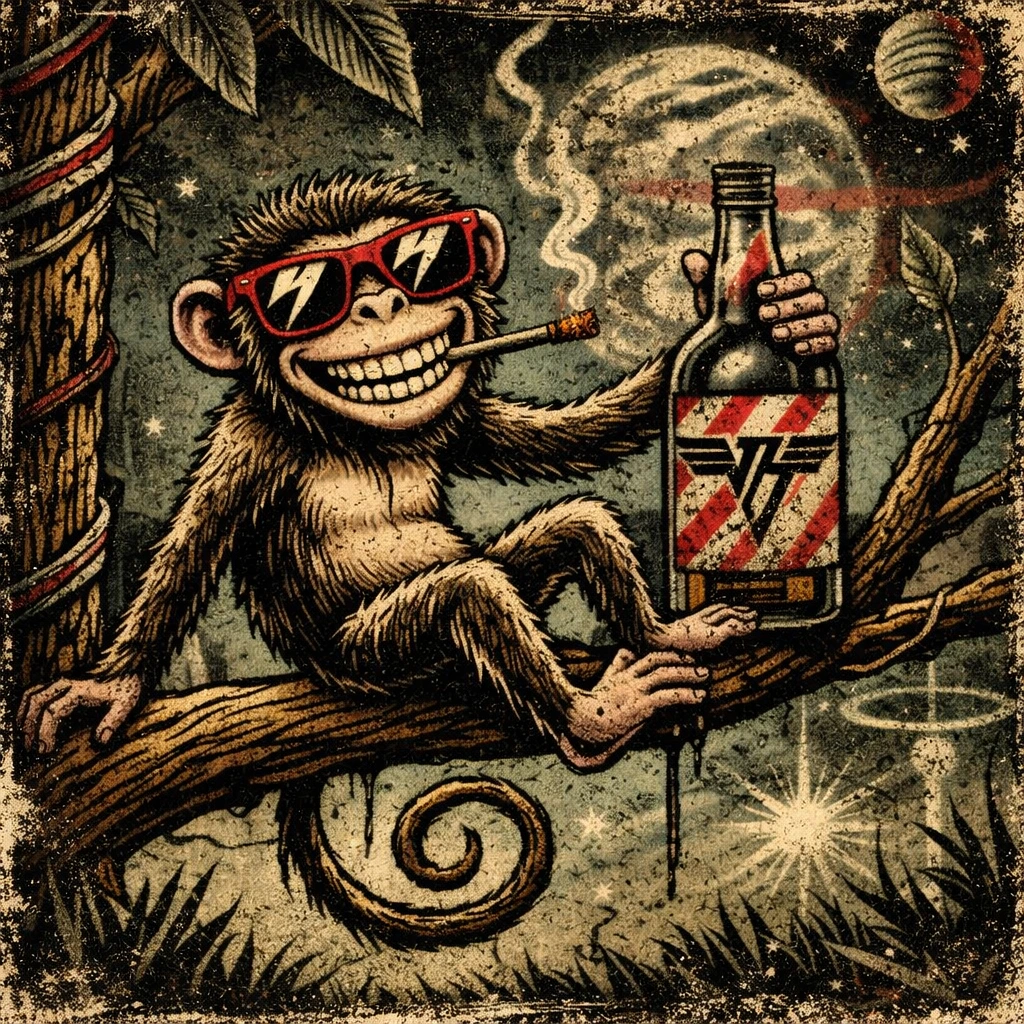
Yet even as I dream, a god — whose earthly name is Eddie Van Halen —
whispers, “Dream not, for dreams are but the opiate of the damned.”

Thus instructed, I hung upon my wooden cross
and pondered beauty —
She whom I loved was fair beyond my telling,
yet her knowing it made my silence wise.
Women perceive too soon how simple men really are.

And what, I thought, makes us more than beasts?
For like the simian tribe we mimic what we see,
aping the idols that dance within our glass boxes.
Were I their keeper, I would rule the monkeys thus:
I’d show them madness crowned, and bid them kneel.
I’d feed them poison, then punish thirst.
I’d have them brawl o’er the color of their fur,
and if my spirit grew ambitious, I’d found a faith:
“Renounce thy monkeying in this life, and lo —
in the next, a hundred golden harlots shall feed thee grapes.”
And when their faith did falter, I’d fake a voyage to the stars,
that they might once again believe.

The wise among them would name it imprinting,
this sorcery by which the greater ape commands the lesser.

Then from above — a voice, mortal and amused:
“Art thou well?”

“I know not,” quoth I, “for my bones yet argue the point.”
My knee was rent, my pride more grievously.

“Good thing thou art fair of face,” she called, “else thou’d be altogether witless.”

And so, limping down the lonely tree, I understood at last
why my god, the mighty Eddie, distilled this sacred drink.
Jack Daniel’s — philosopher’s stone of fools and kings alike!
For as art and music make uneasy marriage,
so too do whiskey and gravity quarrel unto death.
And thus I climb again, chastened, half-blind,
resolved to tread more softly —
for the world, like my bottle, is nearly empty,
and I, alas, am still falling.

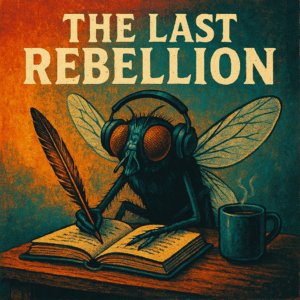
The Last Rebellion

Storytelling is the last rebellion. The final defiance against the silence drawing near.
To speak, even when you have nothing left—
to carve your breath into the cold air
to leave behind a thread of yourself
for strangers whose faces you will never see
this is all that remains.

Tell it.
Even if no one listens.
Even if your voice is broken, or wrong, or small.

Tell it because you are disappearing.
because you were never guaranteed anything—
not survival, not memory, not love.

Tell it because the act of speaking is
the only mark you leave on a world that forgets everything.

You were here.
You sang.
You mattered.
And then you were gone.

But the story—
the story might remain.
And somewhere in it
Beyond the silence,
You might also live.

Chapter 1 – Woke Up!

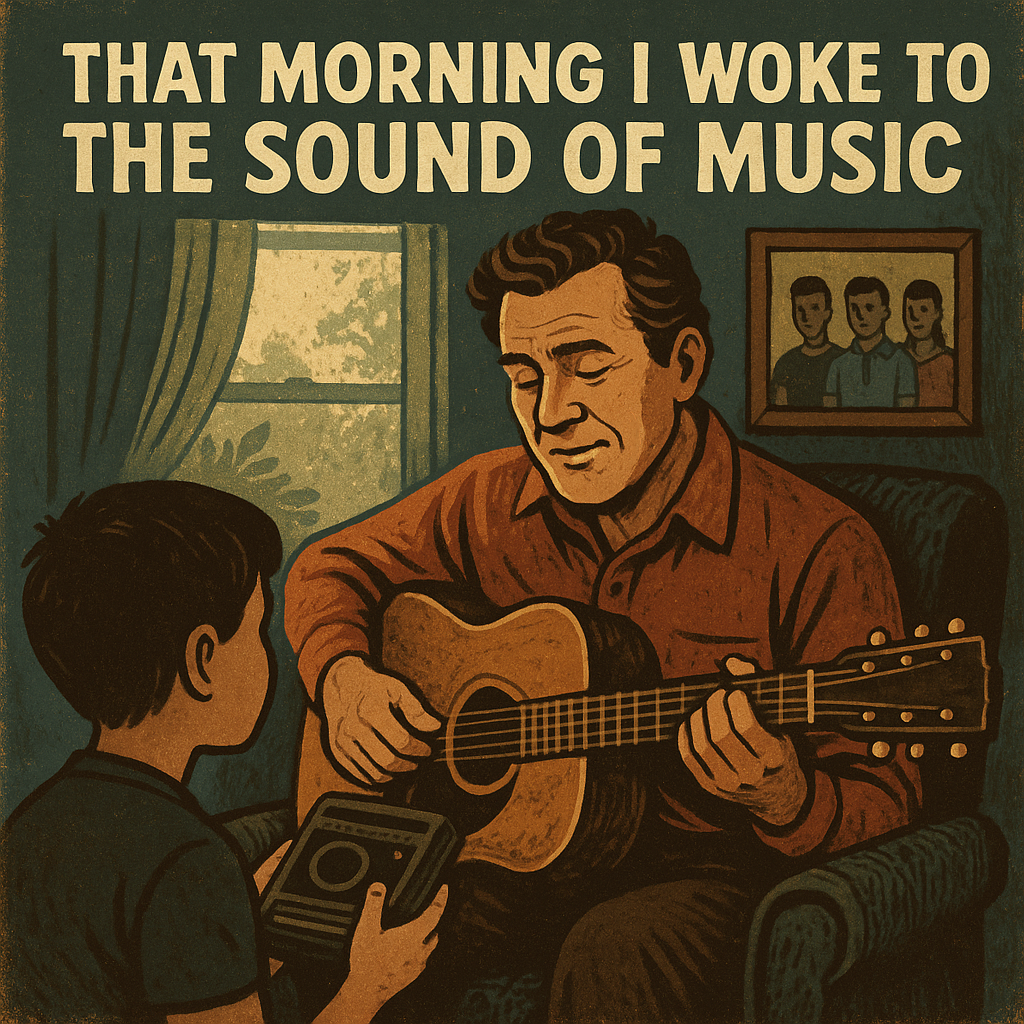
That morning I woke to the sound of music.

Not the radio, not the TV, not even the faint rhythms of the neighbors upstairs stomping through their routines. No, this was music born right there in our living room, and it carried something in it that made the hairs rise on my arms. It was a voice—a voice I thought I knew—and a guitar that should have been retired long before I was born.

I crept from my bed barefoot and followed the sound.

Dad was in the big chair near the window, hunched slightly forward like he was guarding something fragile. His fingers curled around a beat-up Framus acoustic guitar, scratched and dry, the color of old whiskey. I’d never heard my father sing before. I didn’t even know he could.

But that morning, he could. And he did.

He was playing Folsom Prison Blues, low and half-smiling.

I backed away slowly, grabbed my little cassette recorder, and pressed the red button. The wheels spun. The tape hissed. I caught every note like it was falling from heaven.

When he finished, he didn’t speak right away. He just looked out the window like there might still be bars there. Then he turned to me and smiled, and I realized I’d never really seen him before.

From the living room, I saw Mom walk into the kitchen.

I looked around and noticed pictures that hadn’t been there the night before. They leaned against bookshelves and sat crooked on the end tables. Boys I didn’t recognize—dressed in football gear, standing beside bikes too big for me to imagine riding.

“Who are they?” I asked my mom.

She didn’t answer right away. Her hands were busy, drying dishes that didn’t need drying.

“Those are your brothers,” she said.

I stared harder, trying to locate myself in their faces. “What do you mean?”

“Your dad was married before we met,” she said. “You have three brothers. One of them—Matthew—is coming to stay with us next week. He and his friend are coming for the Bob Dylan concert.”

She said it like she was handing me a secret, but one she wasn’t sure I was old enough to keep.

I didn’t say anything. I just nodded—like maybe I’d always known, like maybe I’d dreamed those faces into existence myself. But something turned over inside me, like the world had gotten larger and smaller at the same time.

That night, I played the tape back. Dad’s voice cracked a little on the second verse. The guitar buzzed on the B string. But the song was all there—honest. It felt like he was confessing something without realizing anyone was listening.

I looked at the pictures again. And I wondered if they ever heard him sing.

Chapter 2 – The Blue Tape

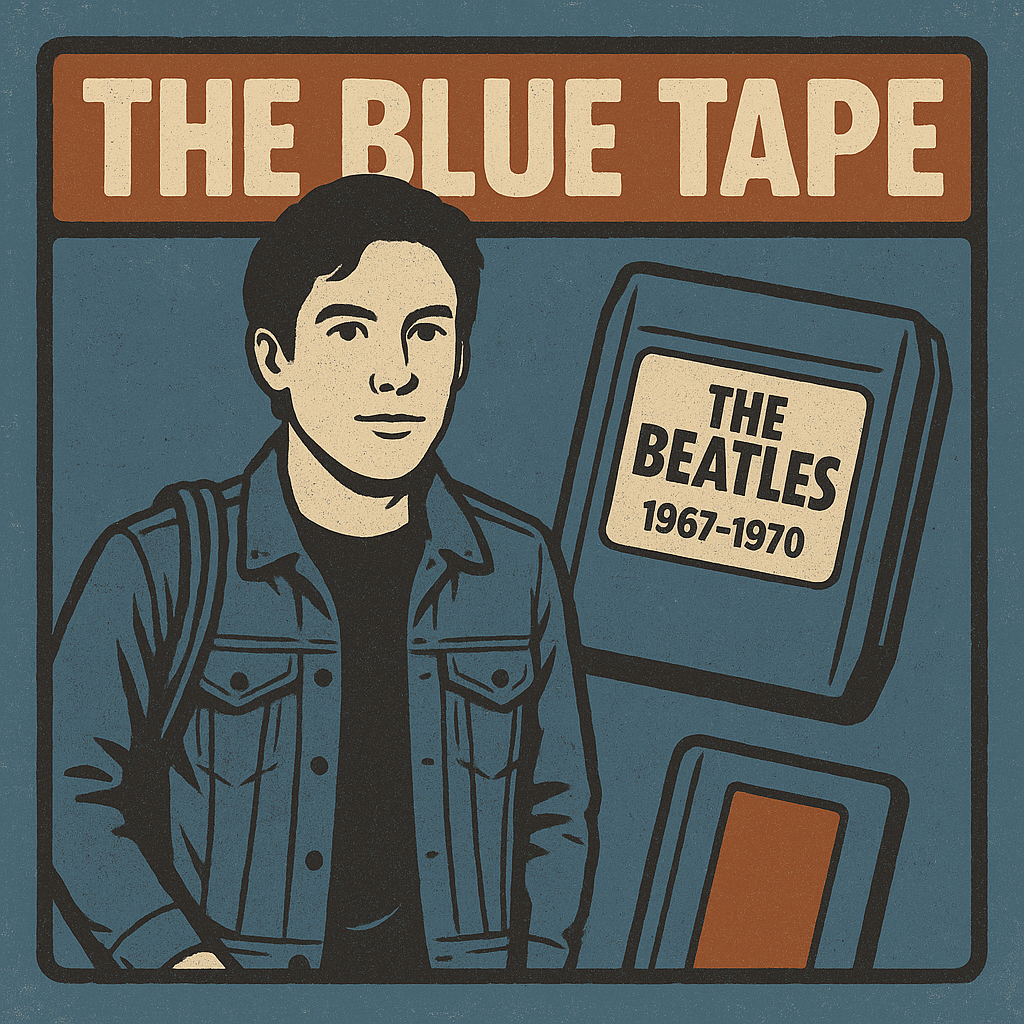
Matthew arrived a few days later with a duffel bag slung over one shoulder. He had a soft voice that made people lean in when he talked. His hair curled behind his ears, and he wore a denim jacket that looked like it had already lived five lives before it found him.

He wasn’t alone. His friend Simon came with him—chubby, quiet, with purple-tinted glasses and a high-pitched laugh. Simon carried a guitar case plastered with old stickers: Joni Mitchell, Neil Young, Led Zeppelin. One said simply SLOW DOWN in crooked red letters.

They had driven in from Calgary in a borrowed station wagon, following some invisible pilgrimage that would end, for now, at the feet of Bob Dylan.

The apartment felt different with them there. Not crowded—just fuller, like someone had opened a window into a wider world. They drank coffee black and smoked cigarettes out on the balcony.

Simon played guitar in the evenings—sometimes out on the balcony, sometimes in the living room. Dad joined him now and then.

I sat cross-legged on the carpet while they passed songs back and forth like offerings.

Simon showed me an open D chord. His fingers were calloused and smelled like smoke and citrus. He pressed my fingers down gently—guiding, not forcing. That’s how I learned to play. Not from lessons, but from hands like his, and moments like that.

He let me strum while he fretted the changes, and when we got through a whole verse together he grinned.

My sister, Kel, sat nearby in her pajamas, drawing suns on the wall with crayons, humming while Mom watched from the kitchen, her eyes soft, her hands quiet. Even Dad seemed lighter somehow, smiling with his arms crossed, like he was watching his past catch up to his present in the best possible way.

But it wasn’t the guitar or Bob Dylan stories that changed me. It was the 8-track. That blue plastic rectangle with the magic sealed inside.

Matthew had brought it in his bag like it was nothing—just something to pass the time. But when he slid it into Dad’s old stereo and pressed play, the room changed.

The Beatles 1967–1970. The blue album. Part two.

The tape started with Back in the USSR, which knocked the wind out of me. But the song that really took hold—the one that looped in my chest for weeks afterward—was Get Back.

I didn’t even understand the lyrics, not really. Who was Jojo? Why did he leave Tucson? Why was Loretta sweet? None of it mattered. What mattered was the urgency—the clean, driving rhythm, the way Paul’s voice danced just behind the beat like it knew something you didn’t.

Get back to where you once belonged.

I didn’t know where that was.
But I wanted to go.

I played it over and over again.

Get Back became my favorite song. Not because of the lyrics—I barely understood them—but because of the way it moved. The way the band locked in. Back in the USSR, While My Guitar Gently Weeps, A Day in the Life—they all felt like doorways. But Get Back? That was the one that made me feel like I had somewhere to be.

The 8-track would click mid-song, breaking the flow to switch tracks. But even the interruptions became familiar, like part of the ritual. Four programs, four shifts. You learned to live with it. I’d grit my teeth, wait for the music to resume, and keep listening.

On the day of the concert, they left early. Simon wore a scarf even though it was summer, and he carried his guitar just in case. “You never know,” he said. “Maybe we get pulled on stage.”

I thought it was a joke, but part of me wondered if it wasn’t. They seemed like the kind of people things happened to. People the world noticed.

They returned late, glowing. Dad was already asleep. Mom too. But I waited up.

“How was it?” I asked.

Matthew smiled. Not the wide, bright kind. A quieter one. Almost reverent.

“He played Simple Twist of Fate,” he said. “Just him and the guitar.”

Simon nodded, sitting on the floor and removing his shoes like it was a sacred act.

I didn’t know the song yet. But I believed them.

The next morning, they were gone. Left before I woke up. I found a note on the counter in Matthew’s slanted handwriting.

But he left more than the note.

He left the 8-track.

And I still think it might be the greatest gift anyone’s ever given me.

I kept it in a shoe box under my bed, right next to the tape of Dad playing Folsom Prison Blues. I listened to them both like prayers—scratched, imperfect, and full of life.

And for a little while, the world seemed like a place where music didn’t just save you.

It gave you something to live for.


Chapter 3 – Thunderbird

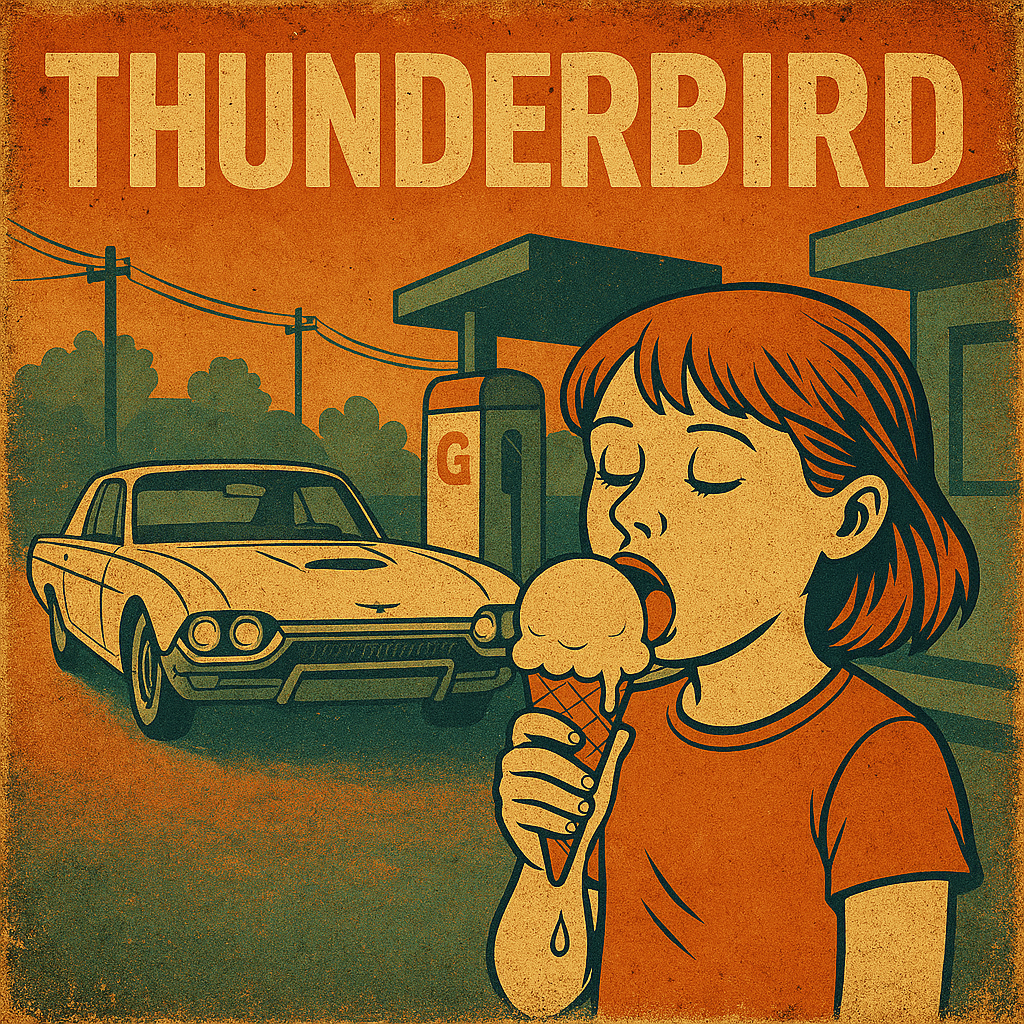
The summer evening unfurled, stretching its last rays across the glinting rooftops and the winding road ahead. Our mighty chariot, a ’62 Ford Thunderbird, rolled south towards the drive-in theater, its engine humming with adventure. My father had restored the beast himself—its frame held together by sweat and resolve.

We pulled into a gas station at the corner. Here, men still performed their rites—lifting hoods, wiping windshields, offering to check the oil with a quiet reverence for the machines they served. My father nodded in approval. There was something ancient in the ritual, something that tethered men to the world, a transaction that required no words beyond the grease-stained handshake of mutual understanding.

Mom took Kel into the corner store. She came back, proud as a queen, with a chocolate-dipped cone already melting across her fingers. The smell of gasoline lingered in the warm air, and I breathed it in like it was perfume. I’ve always loved that smell—even now.

We climbed back into the Thunderbird, the seats still warm from the sun. Kel sat beside me in the back seat, four years old, swinging her legs and holding the cone like a trophy. She licked her fingers and hummed softly, lost in her magic little world. Dad gave the ignition a twist, revved the engine twice—just to feel it—and we rolled out on to the boulevard with the windows down, the evening air in our hair.

The drive-in was near. I imagined the giant screen already glowing, cartoons dancing in slow loops before the movie began. I wondered why everyone always honked when the hotdog finally slid into the bun.

A flick of the wheel. A turn back onto the boulevard. The early evening sprawled ahead of us—restless, waiting.

And then they appeared.

Satan’s Angels. Two of them draped in leather, patches stitched across the back—white letters curling above a red devil with a pitchfork. You didn’t need to be an adult to know who they were. Even I knew. We heard them before we saw them. The two motorcycles came up behind us fast, engines snarling, chrome flashing in the twilight. They weaved recklessly between lanes before cutting us off hard—forcing my father to hit the brakes and steer towards the curb.

The Thunderbird jolted. Kel’s cone slipped from her hand and exploded against the back of the seat. She sat for a moment in stunned silence, then started to cry, sticky hands frozen mid-air.

The bikers zoomed off, continuing to slip between traffic up and down the boulevard.

My father’s hands tightened on the wheel. My mother inhaled sharply, already sensing the shift.

“Paddy, don’t start anything.”

But it had already begun. The fire in my father’s eyes had been kindled.

The Thunderbird dropped a gear and growled to life, surging forward like it had been waiting for the call.

Just ahead, a break in traffic opened like a door—wide enough for him to move without weaving. My father took it. Clean. Decisive.

We picked up speed—fast, but not frantic. The wind rose around us, and the tires gripped the road with purpose. I grabbed the seat in front of me, heart thumping as we closed the gap. No one used seatbelts back then. The bikers darted left and right, slipping between cars like snakes, but my father stayed locked in—eyes forward, hands steady, threading the Thunderbird through the boulevard like he was born to it.

He spotted another opening and took it, swerving across two lanes with surgical control. The Thunderbird slid in beside them, pinning them toward the shoulder. Brakes squealed, horns blared. One of the bikes wobbled as the younger one oversteered, nearly clipping a mailbox. They had no choice. They pulled over.

The door of the Thunderbird opened, and my father stepped into the twilight. The street lamps crowned him in their glow as he walked with quiet purpose toward the bikers. The younger man dismounted, his stance full of insolence and swagger, his words a string of coarse insults that slithered through the air. My father said nothing. I watched him, sensing something beyond anger in his silence.

Then, without flourish or hesitation, my father struck.

His left fist met the biker’s mouth with a thunderous crack. A gasp of air, the shocking crunch of bone and ivory—then silence. The biker staggered backward, clutching his face as blood dripped between his fingers. One by one, his teeth rained to the ground, tiny white relics scattered upon the pavement. His companion, a silent witness to this swift reckoning, remained on his bike shaking his head.

Then—lights of red and blue split the dusk. An RCMP cruiser rolled to a stop, and the officer stepped out, the radio murmuring behind him.

The biker stammered through his ruined mouth, gesturing wildly, his voice laced with agony and outrage. “He fuckin’ knocked my teeth out!”

My father was unshaken, resolute.

The constable’s judgment was swift. “Go see your lawyer about that,” he muttered to the broken warrior, before turning his gaze to my father. “You, go home.”

No shackles, no trials—only an understanding, unspoken yet immutable. The world had its own justice, and tonight, it had been served.

Returning to the Thunderbird, my father flexed his hand. The rogue’s rotting teeth had left their mark, but soon he was in my mother’s care, his wounds bound while Kel slumbered on the couch beside them.

That night, as the world tilted and the moon cast its silver judgment upon us, I lay awake, considering the spectacle I had witnessed. My father had moved like a hero, reckless yet righteous, swift yet deliberate, a man balanced upon the blade of justice and fury.

And I—eight years old, but no longer as young as I had been—stared at the ceiling of our home, waiting for sleep that would not come.

Blue Nun

I was beginning to suspect he was mad.

That was my first thought when he leaned forward, grinning like he had just uncovered the final truth of existence. A madman’s grin—wide, unguarded.

“That’s because you don’t know the secret yet,” he said.

“What secret?”

His grin deepened. “It’s more terrifying than anything you can possibly imagine.”

I’d met him once before, the peculiar roommate of my ornithologist.

“John Lennon, Bob Marley, Kurt Cobain,” he whispered, leaning closer. “They all knew the secret. And once you know, you can never go back.”

Life is power. But power is nothing without its witness. It is not enough to live; one must prove to oneself that one is living. How else can a man know for certain that he exists?

I moved into an ancient church—abandoned by God, but resurrected by my friend, King Dave III. A sanctuary reborn as a recording studio. My quarters lay beneath the nave, in the dark, in the depths. There were no windows, only the soft flicker of candles casting restless shadows across the cold stone walls.

The ceiling, a mere five feet from the floor, demanded humility, lest I be struck down by the unforgiving steel pipe that loomed just above my head. Twice already it had struck me down, an unholy initiation into my new existence.

On the night of my arrival, I shared communion with King Dave III upon his weathered deck, where we imbibed a sacramental bottle of Blue Nun beneath the indifferent gaze of the stars. I spoke to him of the secret that had been imparted to me. To my astonishment, he nodded grimly.

“Aye,” he sighed, as though recalling some long-buried sorrow.

With that, he poured the last of the Blue Nun and we drank in silence, two men bound by some unspoken revelation.

Sleep claimed me at six, the hour ordained for those who refuse to bow to the tyranny of daylight. Yet scarcely had I surrendered to slumber when a great tremor shook the foundations of the church. Thunderous wails and demonic howls erupted above, filling my chamber with their dreadful resonance.

I was hoping for sleep, for peace. But peace was not meant for me.

I took a hockey stick from the corner; a weapon fit for holy war, and crept cautiously towards the staircase. The door flung open with a crash, and in its frame stood King Dave III and a wizened cat named Sister Mary perched upon his shoulder like a pirate’s owl.

“Forgive me,” he said. “I neglected to mention—there’s a primal scream class upstairs this morning.”

Above us, the poor wretches screamed into the silence, as they stumbled upon a cold, indifferent world and found themselves unprepared.

I wondered then: Were they trying to purge the knowledge from their bodies? To scream their way back into ignorance? Had they been driven to perform this kind of exorcism not of demons, but of the truth?

John Lennon sat slumped on the studio couch, his fingers curled around a cigarette that had long since burned down to its last embers.

“You ever screamed so hard you thought your throat would rip open?” he muttered, voice rasping like a needle grinding against a worn-out groove.

Yoko glanced at him, her expression unreadable. “Every day in my head,” she murmured.

John exhaled sharply. “Arthur says it’s good for me. ‘Let it out, lad. Scream like you’re five years old and someone’s just torn your mother away from you.’” He shook his head, his fingers absently tapping ash onto the floor. “Turns out, that’s not so hard.”

But some truths, once known, sink their claws in and never let go.

I lay in the dark and listened. I no longer feared the damp walls, the low ceiling, the candlelight that flickered as if it, too, longed for escape.

I had a companion of sorts—a bat I named Ozzy Osbourne, who flitted through the air ducts above me. I respected Ozzy. We had an understanding: he’d keep to himself, and I wouldn’t bite his head off. Such a fragile peace was more than most men ever achieved.

Then came the rat.

He was a hideous thing, enormous, gorged on filth and shadows. I saw him one night, rifling through the garbage near the door.

The bat I could accept. But the rat was something else. A rat is a mockery of life—a creature that thrives on what has been abandoned, on what no longer serves a purpose. It was an insult, and I could not abide by insults.

Sister Mary was perched upon the kitchen counter, eating lazily from a dish of treats. Without a word, I lifted her and carried her down into the basement, where the rat still lurked.

She became alert. A predator once more. She moved with a deadly purpose, her eyes gleaming. And then, with a furious pounce, she seized the vile creature by its tail, and in a display of merciless justice, she began to thrash it against the unyielding stone. Again and again, the sound of cracking bones echoed through the chamber. The rat shrieked—once, twice—then silence. A crimson stain blossomed upon the cold concrete.

The rat had screamed, as though it knew, in those final moments, that it had always been doomed.

Sister Mary released the lifeless body and gazed up at me, proudly awaiting my approval. I stared at her. The blood dripped. The walls bore witness. The candle flames flickered in the damp air.

What was I to do? Praise her? Mourn the rat? Mourn myself?

Instead, I found a shovel. I gathered the remains and discarded them as one discards anything that has outlived its use. I stood in the blood-soaked basement and asked myself the only question that mattered. How in God’s name do you clean up this much blood?